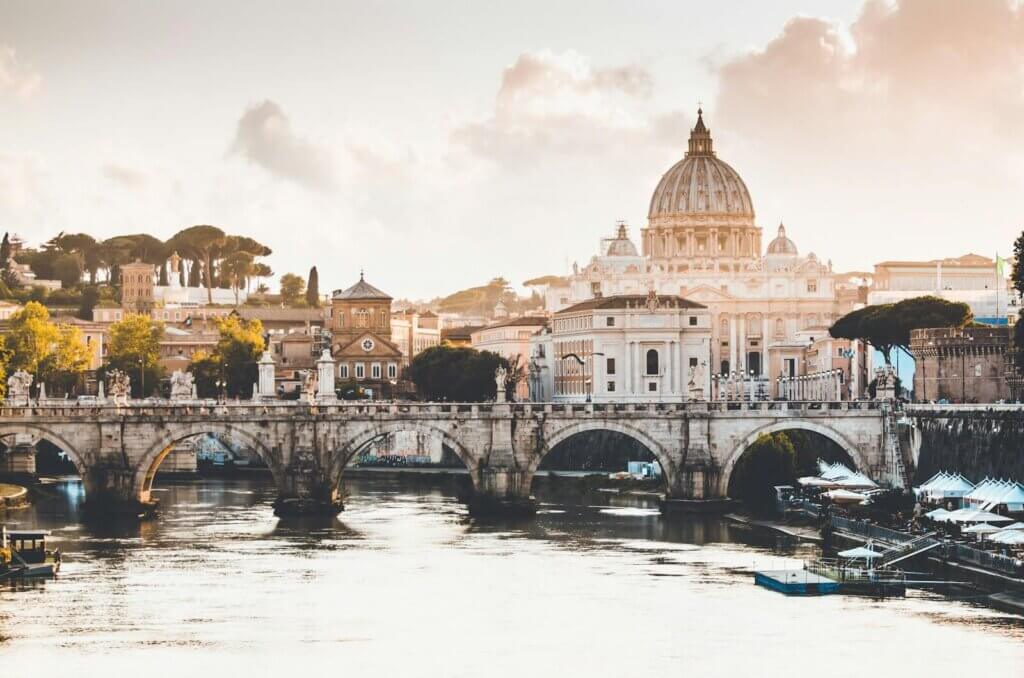



Ancient Rome
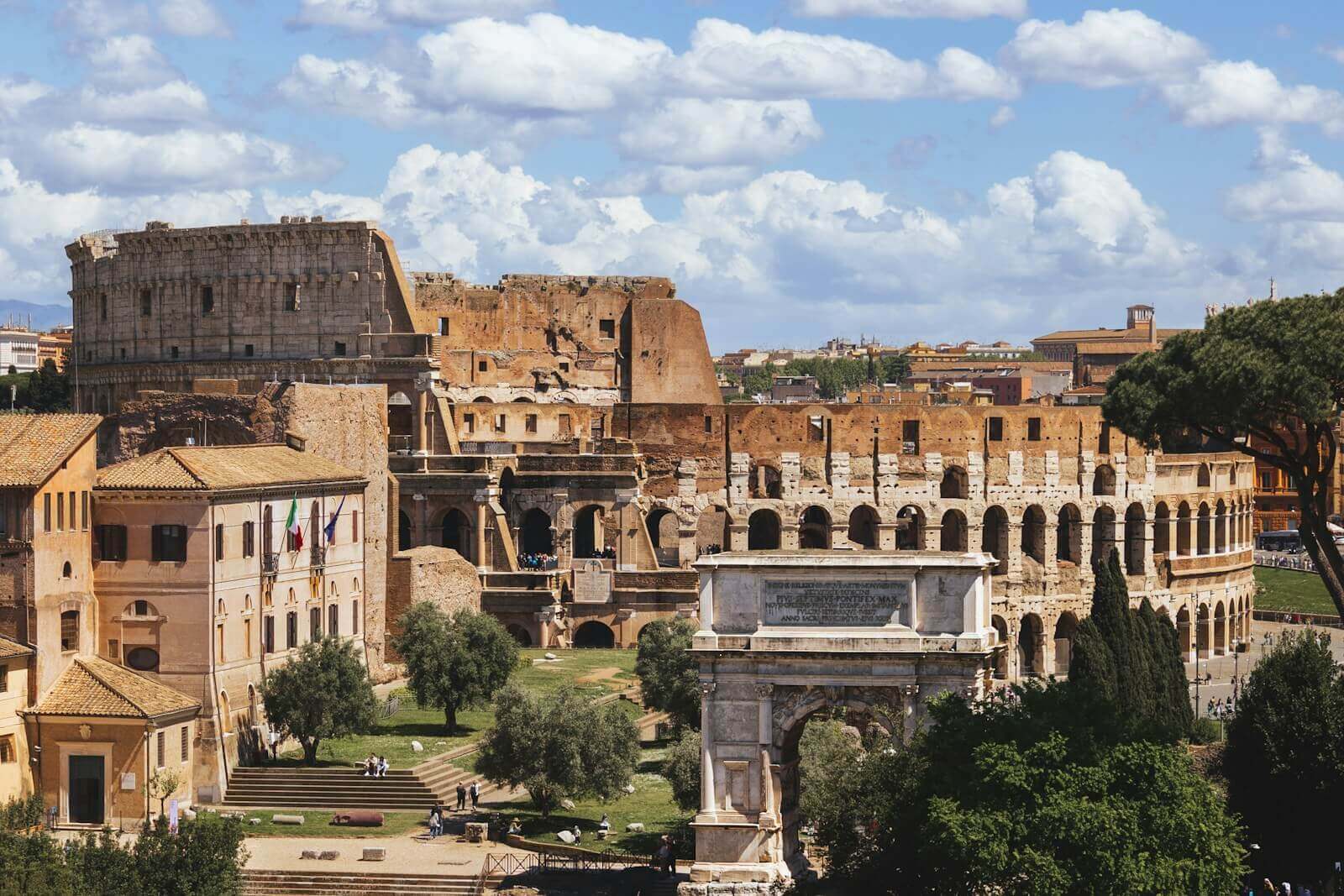
Ancient Rome on the page is one thing; Ancient Rome read on its own stones is another. A private day with us covers the canonical ground — Roman Forum, Palatine, Colosseum — but treats each as a primary source rather than a photo backdrop. The Forum is read as a working civic centre: the Curia where the Senate sat, the Rostra from which Cicero spoke, the Temple of Vesta where the sacred flame was tended without interruption for nearly a thousand years. The Palatine is read as the residential summit of Roman power, from the Iron Age huts of the founders to the Domus Augustana of the emperors. The Colosseum is read as engineering, as politics, and as theatre. Four to five hours, in your own private rhythm, with priority access throughout.
Why this tour matters
Most Colosseum tours are crowd-management exercises. Ours is an intellectual day. The Roman Forum is the densest historical site in the Western world — every paving stone has a name attached to it — and the standard one-hour group walk through it gives perhaps two per cent of what is there. We slow down. We read the Augustan resettlement of the Forum, the Severan rebuilding after the fire of 191, the Christianisation of the basilicas in the fifth century. The Palatine, often skipped entirely by tour groups, receives a full hour. The Colosseum is approached as the political instrument it was — bread and circuses, yes, but also the Flavian programme of distinguishing the new dynasty from the Julio-Claudian past it had succeeded.
What is included
Reserved-time entry to the Colosseum, Roman Forum and Palatine on a single combined ticket; a private licensed guide trained in Roman archaeology; optional upgrade to the Colosseum arena floor or the underground hypogeum, where the lifts and animal cages were operated; optional extension into the Imperial Fora — Trajan’s Markets, the Forum of Augustus, the Forum of Nerva — which lie across Via dei Fori Imperiali and which most short tours omit. A short coffee break is built in mid-tour at a small bar known to Roman archaeologists rather than to tourists.
Who it is for
Travellers who want substance rather than selfie spots. Families with teenage children studying Latin or Roman history at school. Returning visitors who have already done the Colosseum once and now want to do it well. Architecture and engineering professionals interested in the Roman concrete revolution. Classicists and historians who want a guide who reads inscriptions in Latin and discusses Mommsen rather than reading a script.
Booking notes
The Colosseum operates strict timed entry; we book in your name at least seven days ahead, ideally fourteen in high season. Best months are March–May and October–November; July and August are physically demanding because the Forum has no shade. Early morning slots (08:30–09:00) are the most civilised. Combine naturally with our Christian Rome tour the following day, or with our driving tour of Rome for the second-day overview of the wider city.
Questions we hear
Is the arena floor worth the upgrade? Yes — it transforms the spatial understanding of the building. Is the tour suitable for small children? We recommend ages seven and up; under that, we suggest our overview driving tour. How physically demanding is the day? Around eight kilometres of walking on uneven ancient pavement; comfortable closed shoes are essential. Wheelchair access? Possible with advance notice; the Colosseum and Palatine both have step-free routes that most guides do not know.
To arrange a private Ancient Rome day with priority access and a classically trained guide, reach Olga directly on Telegram.
- Languages
English, Russian, Italian
Other private experiences
You may also like
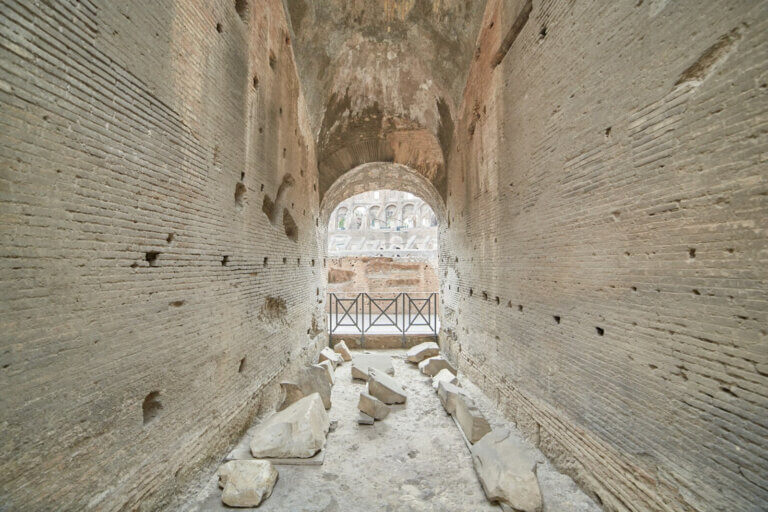 Underground RomeThe Exclusive Rome — A Private Experience with Olga GolubevaFrom €6 000
 Christian Rome Tour
From the Journal
📞 Contact Information
Olga Golubeva
📱 Phone: +39 333 296 9694
📧 Email: info@olgagolubeva.com
Feel free to call or write at any time, any day of the week.
I’ll be happy to answer your questions and help you plan your perfect trip!