



Borghese Gallery Tour
The Borghese Gallery is the finest small museum in Italy and arguably in Europe. Built between 1605 and 1633 as the suburban pleasure villa of Cardinal Scipione Borghese, nephew of Paul V, it was conceived from the outset as a single integrated work of art: the architecture by Flaminio Ponzio and Giovanni Vasanzio, the ceiling frescoes by Lanfranco and Domenichino, the sculpture by Bernini, the paintings by Caravaggio, Titian, Raphael and Correggio — all assembled by one of the most acquisitive and ruthless collectors the Catholic Church has ever produced. A private two-hour visit, with a guide trained in the iconography and in the politics of papal patronage, is the most intellectually dense morning in Rome.
Why this tour matters
The Borghese is timed-entry only: two hours, no exceptions, with a hard ticket cap that makes high-season slots vanish thirty days in advance. Without a guide, the average visitor spends fifteen minutes in front of Bernini’s Apollo and Daphne, ten in front of the Rape of Proserpina, and leaves having seen perhaps a fifth of what is in the building. With a guide who reads Bernini’s marble as the contemporaries read it — as the Counter-Reformation answer to Michelangelo’s terribilità — and who knows why the Caravaggios are arranged in the order they are arranged, the two hours become an education in the seventeenth century.
What is included
Reserved-time entry secured in your name; private licensed guide specialised in Baroque art and in the Borghese collection specifically; full coverage of the four Bernini marble groups on the ground floor — Aeneas, Pluto and Proserpina, Apollo and Daphne, David — read as a chronological progression of the artist’s mastery; the six Caravaggios, including the late Saint Jerome and the Madonna of the Palafrenieri; the Pinacoteca on the first floor with Titian’s Sacred and Profane Love, Raphael’s Deposition, and Correggio’s Danaë; and the formal English-style gardens with optional extension into the Pincio terrace and the panorama over Piazza del Popolo.
Who it is for
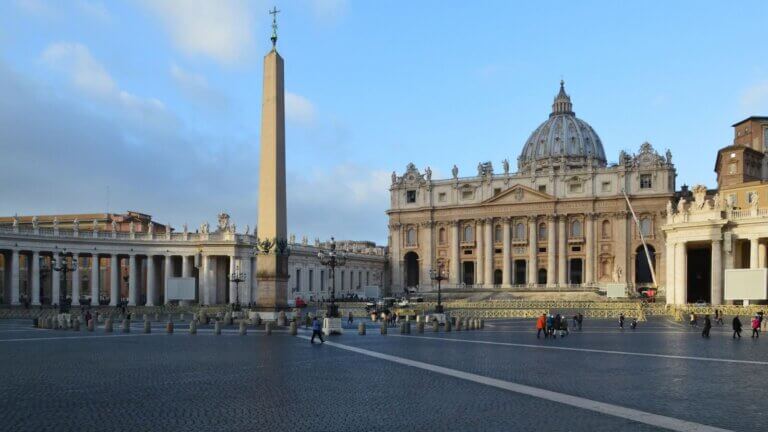
Art collectors and art-history students. Travellers building a Roman Baroque itinerary that already includes Bernini’s Saint Peter’s colonnade and Santa Maria della Vittoria with its Ecstasy of Saint Teresa. Returning visitors who have done the Vatican and now want a smaller, finer, more concentrated museum. Anyone for whom Bernini and Caravaggio are not interchangeable names but distinct artistic projects.
Booking notes
Tickets must be reserved on a named basis and become available on a rolling thirty-day window; we book the moment the slot opens. Best months are November–February for the absence of crowds, May for the gardens. Weekday mornings (10:00 or 11:00) are noticeably calmer than weekends. The visit pairs naturally with a lunch in nearby Parioli at one of the historic family-run trattorias we use, or with a walk down through the Villa Borghese gardens to the Spanish Steps and the driving tour of Rome in the afternoon.
Questions we hear
Can photography be taken? Yes, without flash; tripods and selfie sticks are forbidden. Can the visit be extended beyond two hours? No — the museum enforces a strict turnover. Is the gallery suitable for children? Yes, from ten upwards, particularly with a guide who can read the mythology of the Bernini marbles aloud. What is the dress code? Smart casual; no swimwear, no bare midriffs. Are there fewer crowds in winter? Significantly — January is the connoisseur’s month.
To arrange a private Borghese Gallery morning with a Baroque specialist guide, reach Olga directly on Telegram.
References & official sources
- Galleria Borghese — Italian Ministry of Culture
- Roma Capitale — Villa Borghese park info
- Italia.it — Borghese Gallery overview
- Languages
English, Russian, Italian
Other private experiences
You may also like
From the Journal
📞 Contact Information
Olga Golubeva
📱 Phone: +39 333 296 9694
📧 Email: info@olgagolubeva.com
Feel free to call or write at any time, any day of the week.
I’ll be happy to answer your questions and help you plan your perfect trip!