


Underground Rome
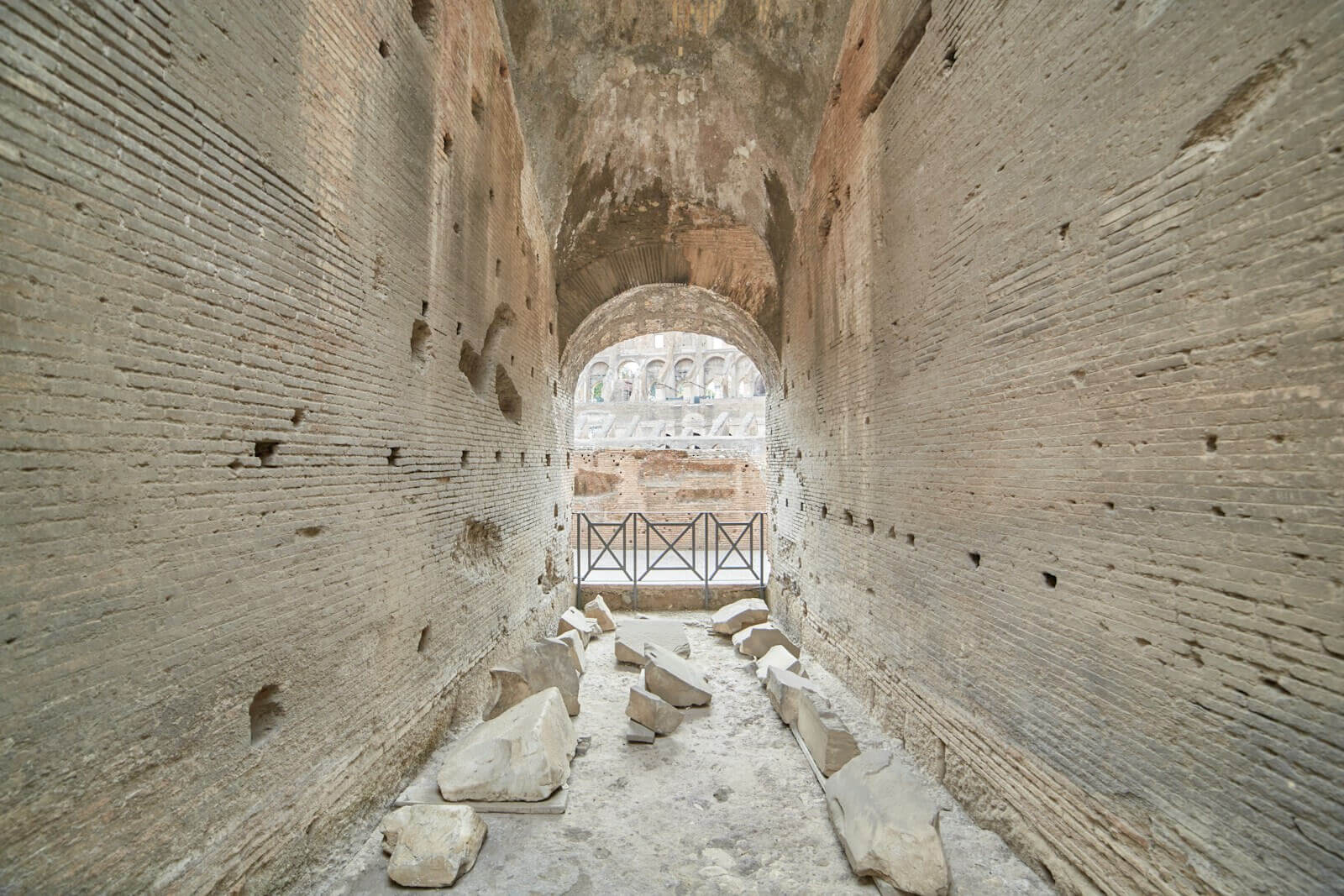
Underground Rome is the city’s second half, lying under foot. Beneath the modern pavement survive layers of Ancient Rome, the Middle Ages and the Renaissance: Roman houses and Mithraea, early-Christian basilicas and catacombs, medieval crypts, aqueducts and sewers still functioning. A private day with us takes in several key underground sites in their archaeological and spiritual weight: the Mithraic temple beneath San Clemente, the Domus of Palazzo Valentini with its transparent floor over preserved mosaics, the Catacombs of San Callisto on the Appian Way, and — by advance arrangement — a normally-closed underground portion of a Roman basilica.
Why this matters
Surface Rome is visible to everyone; underground Rome only to those who go down for it. This is the layer where Roman stratigraphy becomes tangible: you step from a twenty-first-century street five metres down and land in a second-century corridor. Underground Rome is not the “mysterious” part of the city — it is its actual infrastructure: water, burial, cult, commerce, all working underground and continuing to function. It is the most anti-touristic format we offer; it suits only those who genuinely want it.
What is included
Half-day (four hours) or full-day (six hours) private programme with a licensed archaeologist guide; reserved time slots at all sites, booked in advance; the Mithraic temple under San Clemente with a reading of the cult of Mithras in the imperial period; the Domus of Palazzo Valentini with multimedia reconstruction; the Catacombs of San Callisto with the Crypt of the Popes and third- to fourth-century frescoes; private vehicle between dispersed sites; an espresso break in a bar known to archaeologists.
Stratigraphy as a way of reading the city
The principal intellectual value of an underground day is the grasp of Roman stratigraphy that the guest comes away with. After an hour at San Clemente and an hour at Palazzo Valentini, it is clear that every major building in the historical centre stands above an earlier building, and that the modern street is only the top layer of a city twelve metres thick. That understanding changes the perception of all later walks through Rome.
Who it is for
Travellers for whom another museum would be one too many. Practising Christians on the catacomb pilgrimage. Architects and engineers interested in Roman hydraulics, aqueducts and construction. Returning guests who have done the Colosseum and the Vatican and want a different Rome. Teenagers, often re-energised by the dark and the underground after a day on the surface. Not recommended for guests with pronounced claustrophobia.
Booking notes
All underground sites work by timed slot, and some carry weekly visitor caps; minimum two weeks’ notice, four in high season. Palazzo Valentini closes Tuesdays; San Clemente closes Sunday morning during Mass. Best months: March–June and September–November. Pairs with our Christian Rome day the following day or with our Ancient Rome day the day before.
Questions we hear
Genuinely claustrophobic? San Clemente and Palazzo Valentini are comfortable spaces; the catacombs are narrow corridors with low ceilings in places, but not oppressive. Photography? No in the catacombs; yes at San Clemente and Palazzo Valentini without flash. Suitable for children? From ten with archaeological interest. How far walked underground? Around two kilometres total. Safe? Fully; all sites are equipped and certified.
To arrange a private Underground Rome day with an archaeologist guide, reach Olga directly on Telegram.
- Languages
English, Russian, Italian
Other private experiences
You may also like


From the Journal
📞 Contact Information
Olga Golubeva
📱 Phone: +39 333 296 9694
📧 Email: info@olgagolubeva.com
Feel free to call or write at any time, any day of the week.
I’ll be happy to answer your questions and help you plan your perfect trip!