



Inside the Roman Antiquarians: Via dei Coronari and Via Giulia Beyond the Public Showroom
Most visitors who walk Via dei Coronari and Via Giulia see only the showroom: the carefully arranged window, the polished surfaces, the prices written in coded handwriting on a small card. The Roman antiquaries’ world, however, is much larger than the front room. Above the public floor are studio apartments where families have lived for three or four generations; behind locked corridors are workshops where stones are recut, gold leaf is laid, frames are reconstructed. A private visit to two or three of the better houses, by introduction, is one of the more privileged afternoons available in Rome.
The Geography of the Roman Antique Trade
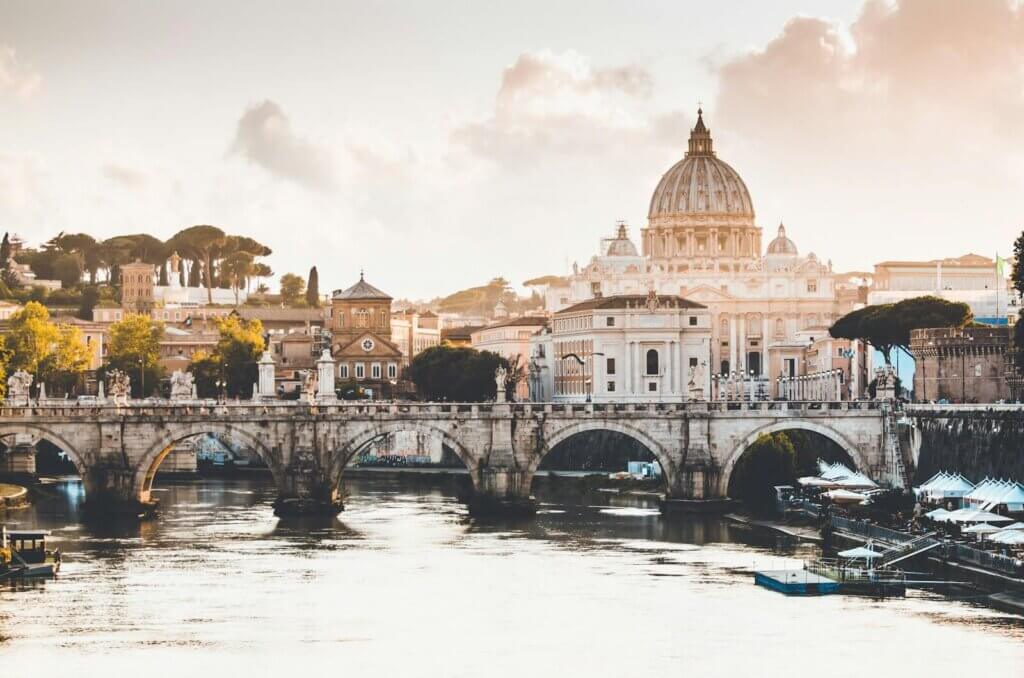
The historic trade is concentrated in three streets. Via dei Coronari, running between Piazza Navona and Castel Sant’Angelo, has been an antiquaries’ street since the seventeenth century; it took its present density after the Second World War, when several Florentine families relocated their operations to Rome. Via Giulia, the great Renaissance axis cut by Pope Julius II in fifteen-eight, today holds perhaps fifteen serious antiquaries, including some of the most respected names for Roman antiquities and Old Master drawings. Via dei Banchi Vecchi and the small streets behind it host more specialised dealers — eighteenth-century silver, Russian icons, rare books. Each street has its own social fabric, and visits to two streets in a single afternoon are usually as much as one wishes to attempt.
What an Introduction Actually Opens
Walking into a Coronari shop unannounced, one sees what is in the window and perhaps a few additional cabinets. With an introduction — and the right introduction, with the right house — what opens is the back room, the upstairs reserves, the family’s working archive, the pieces too significant or too discreet to be left in public view. At one Coronari dealer with whom I have worked for many years, a back-room cabinet holds a small collection of seventeenth-century Roman drawings that have never been catalogued; the proprietor will, for a serious visitor, bring them out folder by folder and discuss provenance, attribution, and the recent market in this category. This is not a service one purchases; it is a relationship that is offered.

Categories Worth Pursuing in Rome Today
Roman provincial silver — particularly from the seventeenth and eighteenth centuries — remains one of the more interesting categories available at reasonable prices for serious collectors; the better Coronari houses can supply important pieces with secure provenance. Drawings, particularly bolognese and roman seicento, are a strength of the Via Giulia dealers; the recent revival of interest in this material has begun to move prices, but quality remains available. Frame restoration — a specialty workshop of Rome since the late renaissance — is something that visiting collectors occasionally underestimate; the better Roman frame workshops, two of them within walking distance of Via Giulia, can recut and gild reproductions of historic frames to a standard that no current British or American workshop can match. For clients with a serious interior project, an afternoon at a frame workshop is frequently more productive than an additional museum.
The Question of Provenance, Carefully Considered
Italian export regulations on cultural property are among the strictest in the world. A serious antiquary in Rome works closely with the Soprintendenza, and important pieces are accompanied by export licences (the notification of non-cultural-interest, in the case of less significant works, or the formal export license for more important ones). I strongly counsel clients against transactions through dealers who cannot demonstrate this paperwork; even valid pieces from the right house should always be accompanied by the correct certification. For clients building a serious Italian collection, the diligence on provenance is as important as the diligence on attribution, and a good guide spends as much time on the former as on the latter.

Beyond the Antiquaries: The Restorers and the Artisans
An afternoon walking the antiquaries’ streets also reveals the artisanal Rome that surrounds them. The frame-restorer’s workshop, where a 19th-century lacquered Florentine frame can be brought back to original splendour. The gilder, working on a small Madonna requiring the laying of leaf on bole over the course of weeks. The mosaic restorer, whose business has continued in the same room for a hundred and twenty years. These workshops are not open to the public, but several of them welcome small private visits by introduction, and the visit gives important context to the objects in the showrooms upstream. I generally include one workshop visit in any antiquarian afternoon.
An Afternoon Composed for the Serious Collector
A private antiquarian afternoon is, in essence, a composition of conversations: with two or three dealers selected to your interests, with a restorer or a frame-maker who illuminates the world from which the objects come, and, where appropriate, with a Soprintendenza-licensed expert who can advise on attribution and export. I generally allow four to five hours for such an afternoon, with a break in the middle for coffee at one of the small bars that the dealers themselves use. The exit point is your hotel, with such pieces as may have caught your interest discussed at greater length over dinner that evening.
Request a Private Consultation
If you would like to compose a private afternoon among Rome’s antiquaries — for serious acquisition, for a project of interior commissioning, or simply for the pleasure of slow looking — I welcome you to request a confidential consultation. Introductions of this kind are made personally and require advance notice for the better dealers and workshops.
From the Journal to your private day
Live this privately
Every day is composed around you — your pace, your interests, your time. Tell Olga what you would like to see.
Speak with Olga All private tours in Rome Build your day