


Beyond the Walls: The Other Half of Rome, an Hour Away
Rome rewards those who stay. But the Romans themselves have always understood that the city’s true luxury is the ease with which you can leave it — for cool hills, spring-fed gardens and volcanic lakes that have drawn emperors and popes for two thousand years. Within an hour of the historic centre lies a countryside of villas, vineyards and silent ruins, and the most discerning way to see it is unhurried, by private car, with someone who knows which morning to choose and where lunch should be.
Tivoli: where emperors came for water
Half an hour east of Rome, the hill town of Tivoli holds two UNESCO World Heritage Sites within a short drive of each other. Villa d’Este, a sixteenth-century cardinal’s pleasure palace, is famous above all for its terraced garden — a cascade of some five hundred fountains, grottoes and water organs driven entirely by gravity, still playing five centuries later. It is, quite simply, one of the most beautiful gardens in Europe.
A few minutes away lies Hadrian’s Villa (Villa Adriana), the vast retreat the emperor Hadrian built for himself in the second century — a sprawling estate of baths, libraries, theatres and pools, including the celebrated Canopus, a long reflecting basin lined with statues. Walk it in the morning light, before the heat, and the scale of imperial ambition becomes almost tangible.
The Castelli Romani: wine, lakes and wild strawberries
South of the city, the Castelli Romani — the “Roman castles” — are a cluster of medieval hill towns scattered among volcanic lakes barely twenty kilometres from the centre. This is the Romans’ own weekend country. Frascati pours the crisp, mineral white wine of the same name (the prized Frascati Superiore) and crowns its centre with the Baroque Villa Aldobrandini, its terraces falling away toward the vineyards. In Ariccia, the fraschette — rustic taverns descended from old farmers’ inns — still serve the region’s legendary porchetta, slow-roasted and perfumed with herbs. And tiny Nemi, perched above its mirror-still crater lake, is famous for the fragoline, the wild strawberries that scent the village each spring.
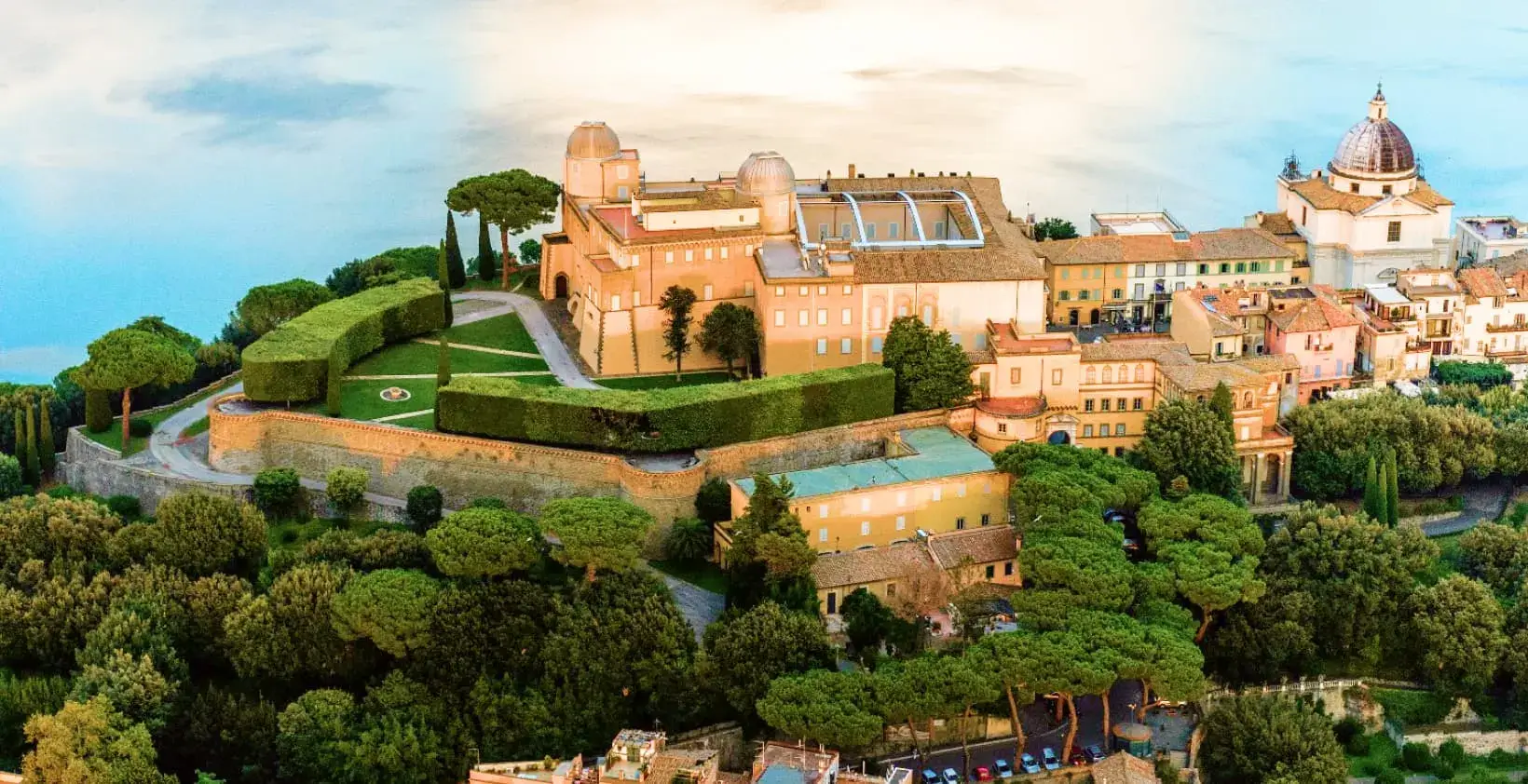
A note for the well-informed: nearby Castel Gandolfo, the papal summer town above Lake Albano, is returning to its historic role as a private papal residence in 2026, and public access to the Apostolic Palace is drawing to a close. The lakeside village itself, however, remains one of the loveliest belvederes in Lazio.
Ostia Antica: Rome’s Pompeii by the sea
Closer still — barely half an hour from the centre — lies one of Italy’s most underrated wonders. Ostia Antica was ancient Rome’s harbour city, and it survives with extraordinary completeness: paved streets worn by carts, a marble theatre, mosaic-floored bathhouses, warehouses and taverns. Where Pompeii draws crowds, Ostia is often serene, its umbrella pines casting shade over a whole Roman town you may have largely to yourself.
Further afield: a castle and a cliff
For a longer day, two destinations reward the drive. On Lake Bracciano, the imposing fifteenth-century Castello Odescalchi stands above the water — a fairy-tale fortress so cinematic it has hosted famously private celebrity weddings. And across the border into Umbria, Orvieto rises on a sheer cliff of golden tufa, crowned by one of Italy’s most dazzling Gothic cathedrals, its façade a shimmer of mosaic and marble.
The luxury of the right day
The countryside around Rome is generous, but its pleasures are a matter of timing — the garden before the coach parties, the cellar that opens only by introduction, the trattoria the guidebooks never find. A private escape designed with Olga Golubeva turns a day trip into something closer to a secret: yours alone, at your own pace.
To shape a bespoke escape beyond the city — gardens, vineyards or quiet ruins — you are warmly invited to begin a conversation.
From the Journal to your private day
Live this privately
Every day is composed around you — your pace, your interests, your time. Tell Olga what you would like to see.
Speak with Olga All private tours in Rome Build your day