


Rome Behind Closed Doors: The City Only a Privileged Few Will Ever See
Most visitors see Rome through a crowd. They shuffle past the Laocoön with three hundred strangers, glimpse the Sistine ceiling over a forest of raised phones, and queue ninety minutes for a photograph they will barely look at again. There is nothing wrong with this Rome. But there is another one — quieter, older, far more rare — that opens only to those who know which doors to knock on, and when.
This is the Rome of privileged access: the city experienced before it wakes, beneath its own streets, and in rooms the public never enters. It asks for a little foresight and the right introductions. What it gives back is the city as emperors, cardinals and connoisseurs knew it — on its own terms, and almost entirely to yourself.
The Vatican, before the world arrives
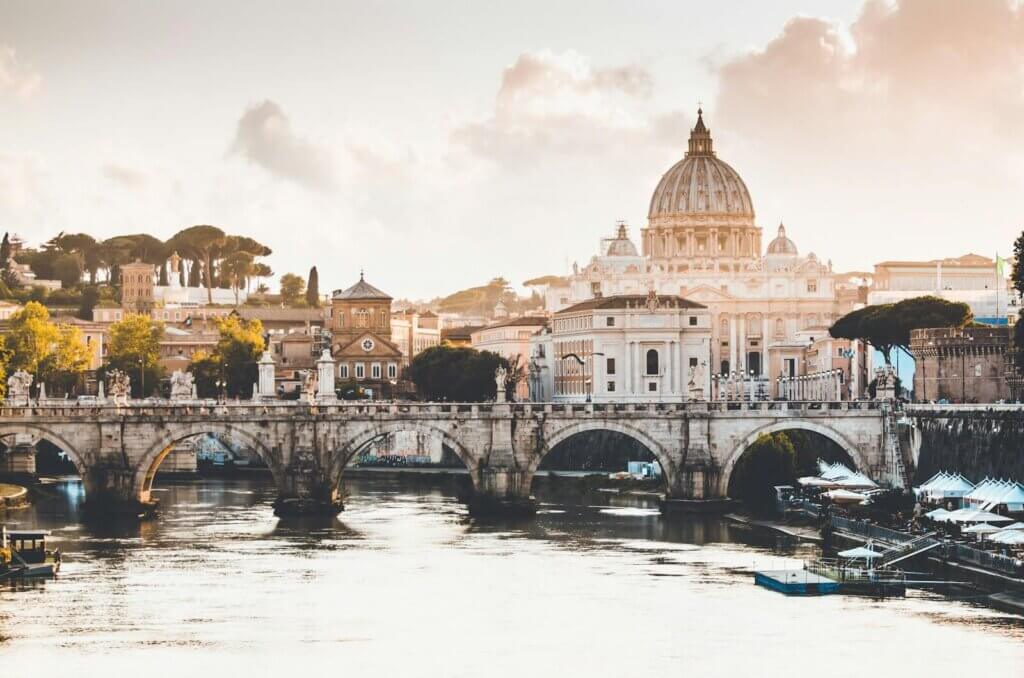
There is a moment, shortly after dawn, when the Vatican Museums belong to almost no one. Through an early-entry arrangement, a small group can walk the Gallery of Maps and the Raphael Rooms while the corridors are still cool and silent, arriving at the Sistine Chapel before the public doors open. To stand beneath Michelangelo’s ceiling with space to breathe — to actually tilt your head back without a shoulder against yours — is to understand the work as it was meant to be felt: as revelation, not as a checklist.
The light at this hour is the secret. It falls softly through the chapel’s high windows, lifting the lapis blues and terracottas of The Last Judgment into something almost alive.
Beneath the basilica: St Peter’s tomb
Few realise that beneath the marble splendour of St Peter’s Basilica lies a first-century Roman cemetery, sealed for sixteen centuries and excavated only between 1940 and 1949. The Scavi — the necropolis tour — descends into this buried street of pagan and early-Christian tombs to its devastating conclusion: the resting place of Saint Peter himself.
Access is deliberately, almost severely, limited. Only around 250 visitors are admitted each day, in groups of roughly twelve, for a tour of some ninety minutes. There is no online ticket; the only way in is a written request to the Vatican’s Excavations Office (the Ufficio Scavi), made months ahead. It remains one of the most profound — and least crowded — experiences in all of Rome.
Where gladiators walked
The Colosseum most people visit is the one seen from the railings. The Colosseum the Romans knew is the one underfoot. Special-access tours lead through the Gladiator’s Gate directly onto the reconstructed arena floor, where fighters once entered before fifty thousand spectators, and down into the hypogeum — the underground labyrinth of cells and machinery where animals and combatants waited in the dark. To stand on the arena and look up at the tiers, or to walk tunnels normally closed to the public, collapses two thousand years in an instant.
By reservation only: the Borghese’s two sacred hours
Some doors in Rome are exclusive by design. The Galleria Borghese admits visitors only in timed two-hour windows, in strictly limited numbers — a system that keeps Cardinal Scipione Borghese’s villa serene where other museums roar. Within these walls: Bernini’s Apollo and Daphne and The Rape of Proserpina, marble turned to fleeing flesh; six Caravaggios; Canova’s reclining Pauline Bonaparte. Slots vanish weeks ahead, especially in summer — which is precisely why the right reservation, secured early, feels like a privilege.
The art of the open door
Exclusive Rome is not bought; it is arranged — through timing, relationships and an intimate knowledge of how the city actually works. This is the quiet craft behind a private experience designed with Olga Golubeva: the dawn slot, the letter to the right office, the door that opens because the right person asked.
If you would like a Rome shaped entirely around you — its closed rooms quietly opened — you are warmly invited to begin a conversation.
From the Journal to your private day
Live this privately
Every day is composed around you — your pace, your interests, your time. Tell Olga what you would like to see.
Speak with Olga All private tours in Rome Build your day