


Castel Gandolfo & The Pope’s Summer Palace Gardens
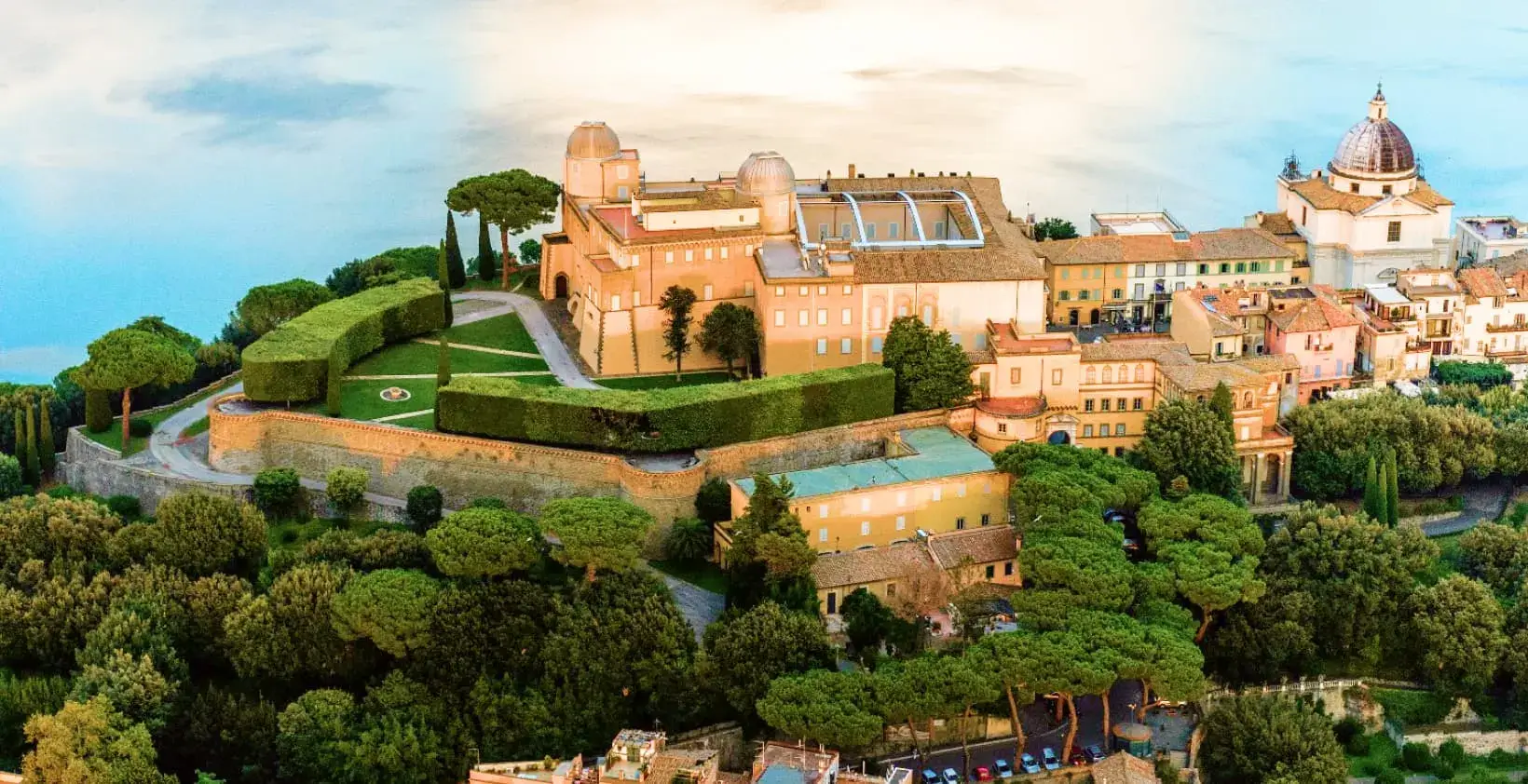
Castel Gandolfo — a small medieval town twenty-five kilometres south of Rome, perched on the lip of the volcanic crater of Lake Albano — has been the summer residence of the popes since Urban VIII bought the medieval Castello Savelli in 1623. For three hundred and ninety years, the papal palace and its gardens were closed to the public; the popes spent four summer months there, the doors were sealed, and the town outside lived a particular existence as guest of a private papal household. In 2014, Pope Francis quietly decided that the popes would no longer use the palace — and that the palace and gardens would open to the public. The doors opened the following year. A decade later, the gardens are still one of the most discreet Roman day-trips a luxury visitor can plan.
The Apostolic Palace, room by room
The Castel Gandolfo papal apartments are not the architectural showpiece of Rome’s Vatican equivalent — they are quieter, more domestic, more revealing of the daily life of a pope. The visit covers the formal audience hall (a Carlo Maderno space of 1626), the papal study (where Pius XI signed the Lateran Treaty with Italy in 1929), the small private chapel of Paul VI, the bedroom of Benedict XVI (left exactly as he kept it from 2005 to 2013), and the kitchen of the popes. The kitchen is, in our experience, the room visitors remember best: the wood-burning oven of John XXIII, the espresso machine of Paul VI, the family-scale dinner table at which Benedict ate breakfast. The intimacy is the entire point.
The Barberini Gardens — the supreme element
The fifty-five hectares of gardens above the papal palace — designed by Carlo Fontana for Cardinal Antonio Barberini in 1670 — are the supreme element of the day. The formal Italian garden runs along the lip of the crater; the cryptoporticus of the original Domitianic villa (yes, Domitian had a villa here in the first century CE — Castel Gandolfo’s papal connection is a much later overlay on Roman imperial residential history) is preserved beneath the gardens; a long axial avenue of holm-oaks runs to the southernmost belvedere, where Lake Albano opens beneath like a perfect mirror. The garden tour is conducted on foot — the gardens cannot be entered by car — and takes approximately one hour.
Domitian’s villa, beneath the gardens
The Roman archaeological surprise of Castel Gandolfo is the Villa di Domiziano — the country estate of the emperor Domitian (81–96 CE), of which the cryptoporticus, the theatre, and several mosaics survive beneath the Barberini Gardens. The villa is reached by a separate ticket and is, in summer, the coolest single archaeological site near Rome. The mosaics are still in place; the theatre, half-excavated, is among the few imperial private theatres to have survived in central Italy.
How a private day arranges itself
The day begins at 09:30 from Rome by chauffeured car — forty-five minutes through the Castelli Romani countryside. The papal palace is the morning visit (90 minutes); the gardens are the late morning into early afternoon (90 minutes); lunch at the Antico Ristorante Pagnanelli — a 1882 family establishment overlooking Lake Albano — is the centrepiece of the day (carbonara made with Roman pecorino, a vertical of Frascati and Marino wines, lake fish or roast lamb depending on season); the cryptoporticus and Domitianic theatre are the early-afternoon visit; the return to Rome is at 17:30, in time for an early evening in the city. The Italian wine tasting that closes the lunch is the small unforgettable luxury.
Combining with the rest of the Castelli
Castel Gandolfo is the heart of the Castelli Romani — the small ring of medieval towns in the Alban Hills south of Rome, each one perched on its own volcanic crater. The natural full-day variant adds Lake Nemi (the «Mirror of Diana», see our private Lake Nemi day) in the afternoon and a visit to a Frascati noble villa (see our private Frascati villa day) at sunset. For travellers building a Castelli-themed Roman week, the full programme runs over three full days.
Light, season and booking
The gardens are most photogenic between mid-April and late October, when the holm-oak avenue holds its full leaf. The papal palace is open from Tuesday to Sunday; the gardens are open every day. We book the palace visit four weeks ahead; the gardens are bookable seven days in advance. The lunch at Pagnanelli is reserved a week in advance; the table on the lakeside terrace is at our standing request.
To plan a private day at Castel Gandolfo, contact Olga via Telegram.
From the Journal to your private day
Live this privately
 Exclusive Vatican: A World of Grandeur, Art, and Spirituality
 Vatican Without Queues: Discover the Treasures of the Holy See
Every day is composed around you — your pace, your interests, your time. Tell Olga what you would like to see.
Speak with Olga All private tours in Rome Build your day