



Santi Quattro Coronati: The Pope’s Hidden Cloister on the Celio
A traveller who has crossed the Colosseum a dozen times rarely climbs the narrow ramp of the via dei Santi Quattro — and yet, two hundred metres from the amphitheatre, behind a fortified gate that looks more like a 9th-century military stronghold than a church, lies what may be the most extraordinary single room in Christian Rome: the chapel of Saint Sylvester, frescoed in 1246, kept behind a small grilled window, accessible only by ringing a bell and waiting for an Augustinian sister of the cloistered community to open. The chapel — and the medieval cloister beyond it — is the Santi Quattro Coronati: the «four crowned martyrs» of early Christian Rome, and the most beautifully preserved hidden monastery in the city.
The fortified silhouette on the Celio
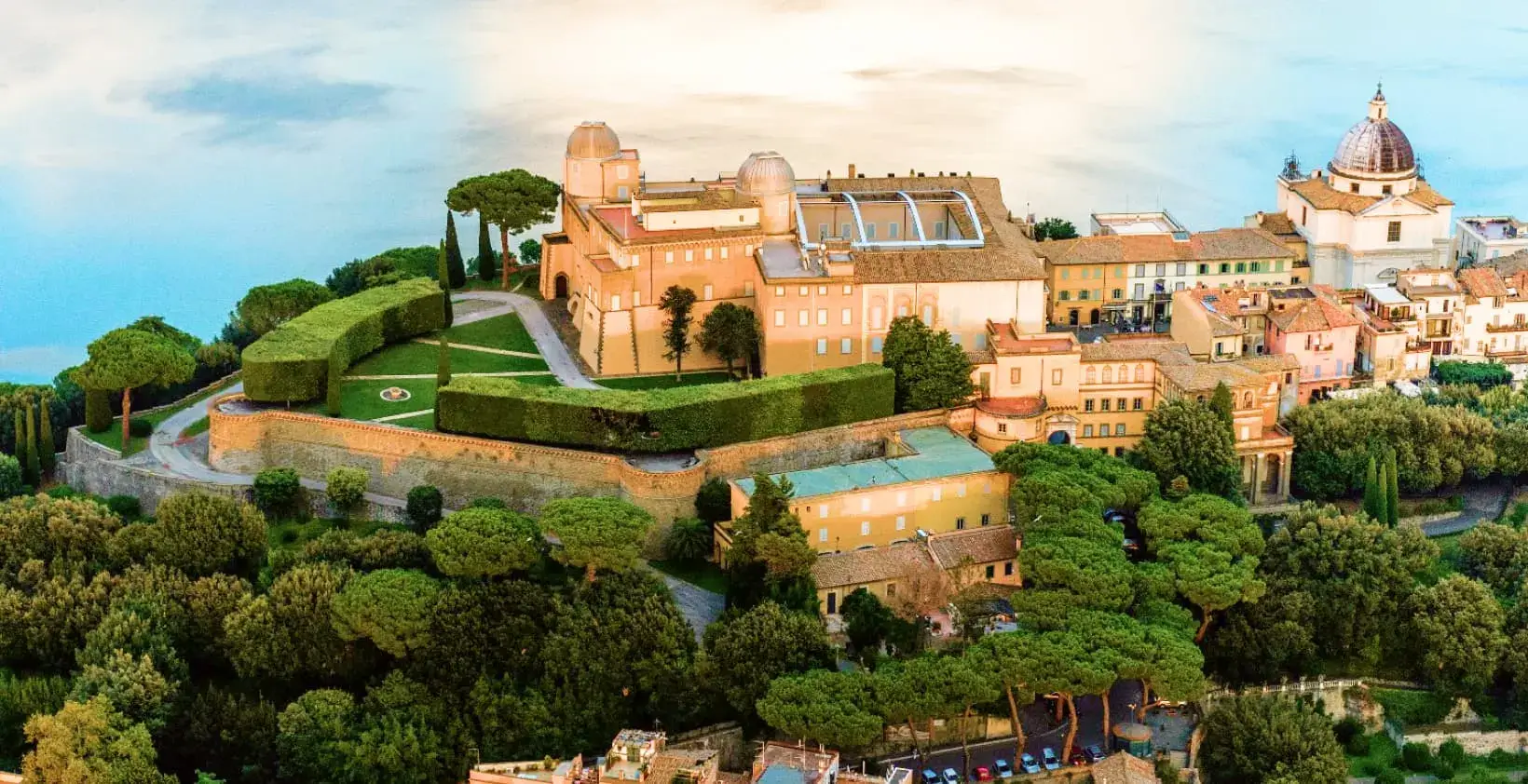
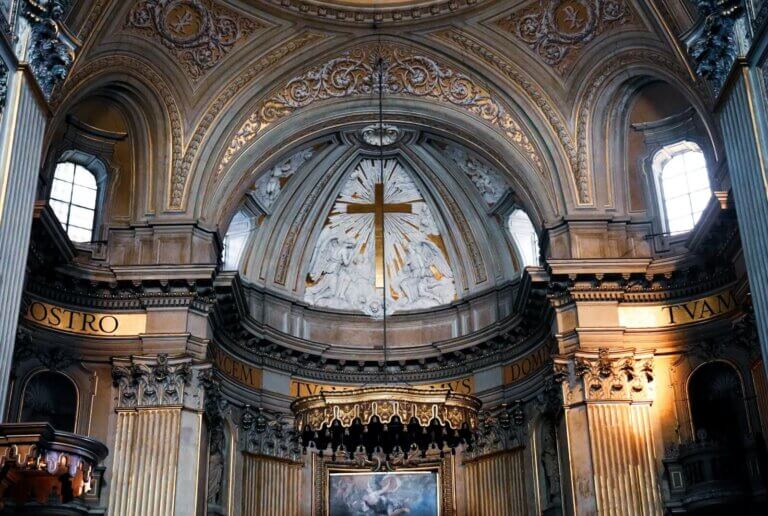
The Santi Quattro Coronati is, architecturally, the only fortified basilica still standing in Rome. The complex was rebuilt in the 9th century as a papal stronghold on the road from the Lateran to the Colosseum; the bell tower (one of the oldest surviving in Rome) and the double atrium give the visitor the impression of approaching a small castle rather than a place of worship. The exterior is severe; the interior, by contrast, is one of the warmest and most quietly luminous spaces in Rome.
The Saint Sylvester Chapel
The 1246 fresco cycle of the Saint Sylvester Chapel is the principal reason an art-loving traveller should make the effort. The frescoes narrate the legendary conversion of Constantine — the Donation of Constantine, the gift of imperial authority to Pope Sylvester — and form the most complete pre-Giotto fresco narrative in Rome. The chapel is small (six metres by four), and visited in silence; the visit is forty-five minutes; the door is closed and reopened from the outside by a sister.
The cloister: ring the bell, wait three minutes
To visit the 13th-century Cosmatesque cloister — the small garden, the spiral colonnettes inlaid with marble and porphyry, the central fountain — the visitor must ring a small bell to the left of the church door. A cloistered Augustinian sister will answer through a wooden window; a small donation is left through a turning drawer; the inner cloister is then opened. The cloister is the most silent garden in Rome: birds, the fountain, no traffic, no tourists. The visit is half an hour; the photographs forbidden inside the cloister itself.
How we propose the morning
We propose the Santi Quattro Coronati as the opening of a private morning on the Celio hill — combined with the basilica of San Clemente (three minutes’ walk) and the Colosseum panorama from the Parco del Celio. The full programme fits naturally into our Christian Rome tour and into our Ancient Rome itinerary when the guest prefers a slower, less-crowded route. For the Celio’s other 13th-century cycle, we often combine the morning with the Sacred Rome spiritual journey.
Practical notes
The chapel and cloister are open in the morning (10:00–12:00) and in the afternoon (16:00–18:00); closed on Sunday afternoon. A small donation is asked for the chapel; modest dress required (covered shoulders, no shorts above the knee). For a fully private morning at the Santi Quattro Coronati — including bell-and-cloister access, the San Clemente three-level basilica next door, and an unhurried art-historical reading of the Saint Sylvester cycle — we recommend booking at least three days ahead.
To curate a private morning at the Santi Quattro Coronati and the Celio’s hidden monasteries, contact Olga via Telegram.
From the Journal to your private day
Live this privately
Every day is composed around you — your pace, your interests, your time. Tell Olga what you would like to see.
Speak with Olga All private tours in Rome Build your day