


Tivoli: Hadrian’s Villa & Villa d’Este — A Day Through Imperial and Renaissance Italy
Thirty-two kilometres east of Rome, on a chain of small Sabine hills, sit two of the most extraordinary garden complexes in Europe — Hadrian’s Villa and the Villa d’Este. Together they form a kind of imperial-Renaissance double bill that no other city in Italy can offer in a single day. One was the private retreat of a Roman emperor at the apogee of his empire; the other, the private retreat of a Renaissance cardinal who had been promised the papacy and never received it. Both are UNESCO sites. Both reward a slow visit. And both, when undertaken privately and with a discreet driver, are some of the most rewarding day trips from Rome.
Hadrian’s Villa — the empire in scale model
The Villa Adriana, begun in 117 CE, was never a “villa” in the modest sense. At its full extent it covered 120 hectares — larger than the centre of Pompeii — and contained Hadrian’s personal recreations, in stone, of the favourite buildings he had encountered across his empire: an Egyptian canal lined with caryatids (the Canopus), a Greek theatre, a small island palace ringed by a moat where the emperor could retreat absolutely (the Maritime Theatre), and a series of bath complexes that anticipate, in their use of light and water, the great Baroque ensembles of Rome by sixteen hundred years. A serious private visit takes three hours, slowly. The Canopus at midday in autumn light is one of the most photographed scenes in Italy — and almost everyone photographs it badly.
Villa d’Este — the Renaissance garden, perfected
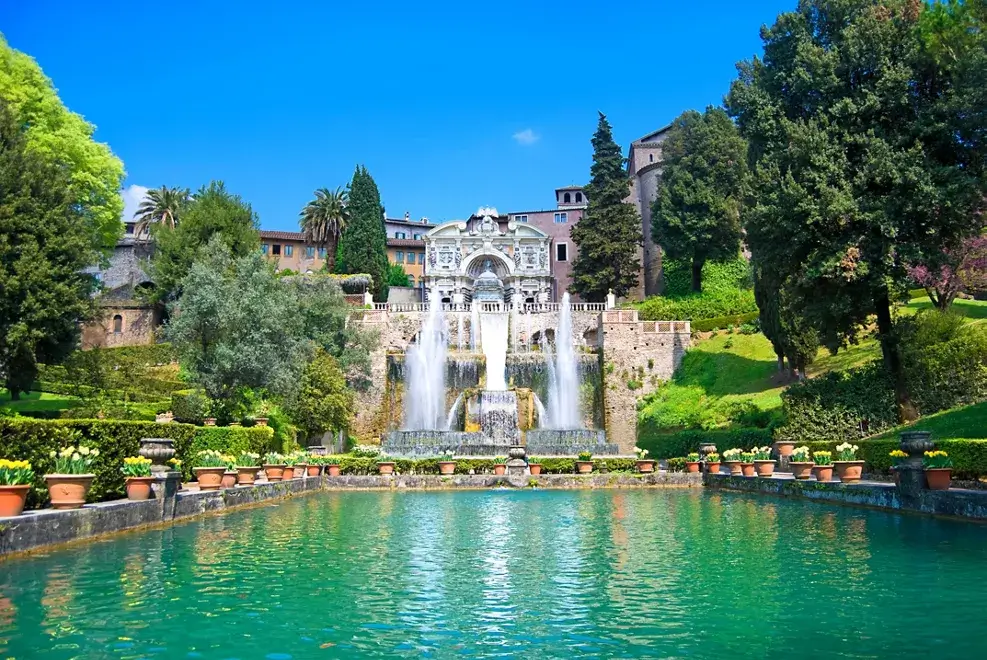
Twenty minutes’ drive from Hadrian’s Villa, in the centre of the medieval town of Tivoli, sits the Villa d’Este — built in the 1550s for Cardinal Ippolito II d’Este, son of Lucrezia Borgia and grandson of Pope Alexander VI. The villa itself is modest; the garden is one of the masterpieces of European landscape design. Pirro Ligorio engineered a hydraulic system fed by the Aniene river that powers, to this day, five hundred and one fountains, fifty cascades, and the great Avenue of a Hundred Fountains. The Organ Fountain plays an actual hydraulic organ on the hour. The Rometta is a tiny scale model of ancient Rome itself, surrounded by water. There is no other garden in Europe quite like it.
How to structure the private day
Depart Rome at 08:30 — early enough to reach Hadrian’s Villa for the 09:00 opening, before the heat. Three hours at Hadrian’s, ending at the Canopus when the light has begun to drop a little. A short drive into Tivoli town. Lunch in a discreet trattoria — we typically arrange a table at one of two family-run osterie that still grill the Roman abbacchio over wood, or, for vegetarian guests, an extraordinary lunch built around the Sabine artichoke. Then, in the cooler hours of the afternoon, Villa d’Este — two hours, slowly, with time to sit in the Cypress Round and listen to the gardens settle.
What the day requires
Comfortable shoes. Both sites involve serious walking — Hadrian’s Villa is essentially an archaeological park, and Villa d’Este is built on a steep terraced slope. A wide-brim hat in summer; both Canopus and the Avenue of Fountains are largely without shade. A senior licensed guide who can read inscriptions and who knows, for example, which of Ligorio’s fountains has just been restored and which is currently being restored — there is always one or the other. A driver who will wait, calmly, in the shade of the parking area for the four hours of your visit. And a willingness to skip the obvious lunch addresses for the discreet ones.
Pairing and alternatives
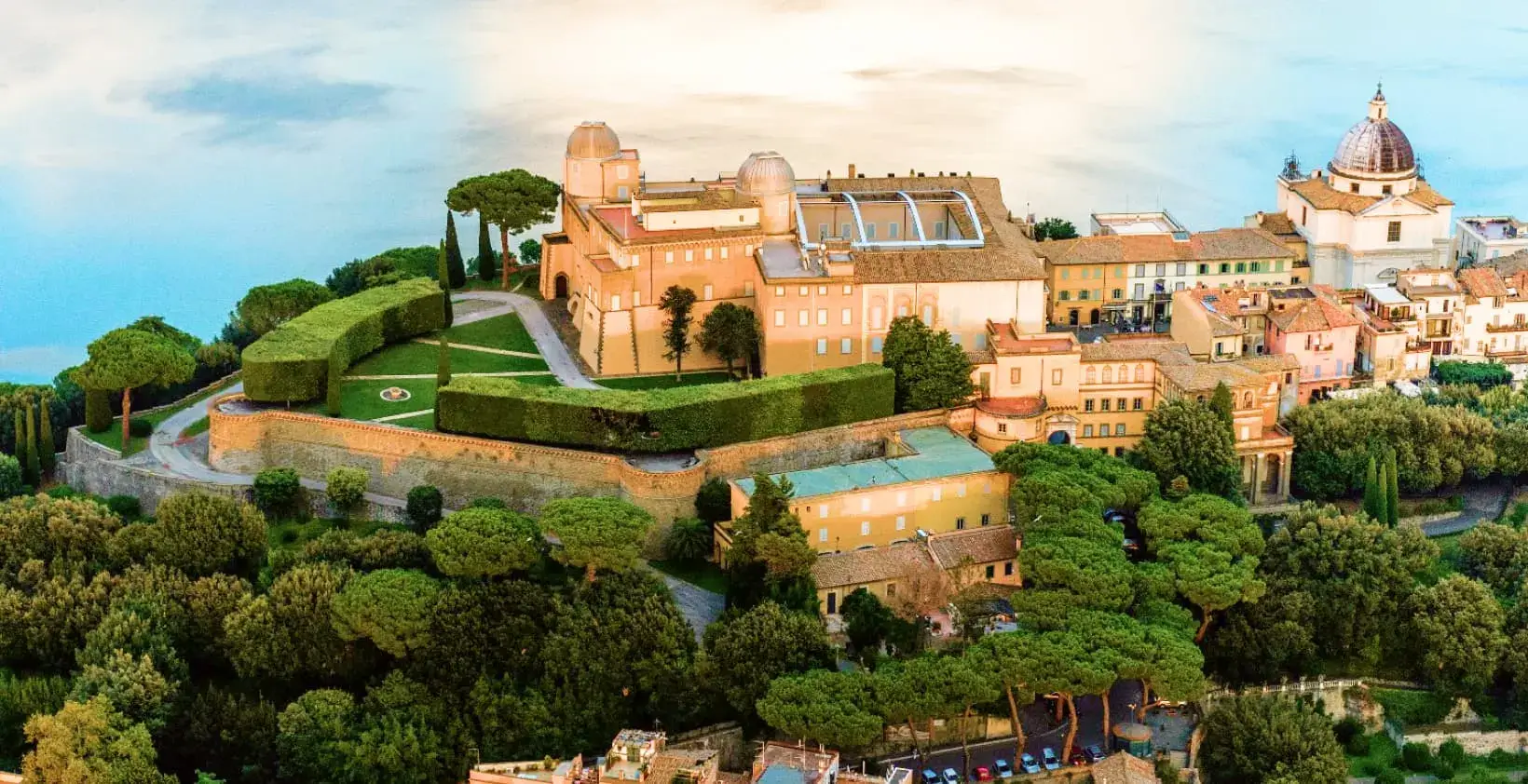
For travellers who have already booked our Tivoli tour on a previous visit, the natural extension is a day in the Roman Castelli (see our Castelli programme), where Castel Gandolfo’s papal residence and the lake of Albano offer a quieter, more pastoral counterpoint. For those who want to combine Tivoli with northern luxury Italy, our private helicopter Capri/Amalfi day is available the following morning from Ciampino. For those drawn to the gardens of Italy more broadly, our Garden of Ninfa programme is an ideal Roman complement.
A few honest notes
Hadrian’s Villa is not the Colosseum. Many of the buildings are roofless and fragmentary. The narrative depends entirely on your guide — without one, much of the site reads as scattered ruins. The Villa d’Este, by contrast, is one of those rare gardens that reveals itself even to a silent visitor — but the engineering history, told well, transforms the visit. The day works best for travellers who already know the standard Rome itinerary and want something deeper, slower, and more Italian.
To plan a private Tivoli day around your travel dates, contact Olga via Telegram.
References & official sources
- Villa d’Este — UNESCO World Heritage
- Villa Adriana — UNESCO World Heritage
- Villae site (Hadrian’s Villa & Villa d’Este)
From the Journal to your private day
Live this privately
Every day is composed around you — your pace, your interests, your time. Tell Olga what you would like to see.
Speak with Olga All private tours in Rome Build your day