



Become a Roman Mosaicist: A Private Atelier Masterclass
Mosaic, in the Roman imagination, is a Pompeian floor or a Byzantine ceiling — a finished surface admired in a museum. The work itself — the cutting of marble tesserae from a slab with a hammer and a mallet, the laying of those tesserae into a bed of lime mortar, the slow making of a square centimetre of pattern from twenty individual pieces of stone — is one of the most quietly luxurious manual experiences Rome can offer. A private masterclass with a senior Roman mosaicist, in a working atelier two minutes from the Pantheon, is the rarest of our masterclasses; it is also the one guests most often describe, afterwards, as having «changed how they looked at every Roman floor for the rest of the week». The class lasts three hours and concludes with guests taking home their own signed opus tessellatum — a hand-cut, hand-laid mosaic of approximately ten by ten centimetres.
The atelier
The atelier is one of three working mosaic studios in central Rome — a small fourth-generation establishment in the Centro Storico, run by a senior mosaicist whose grandfather worked on the restoration of the Sistine Chapel ceiling, whose father restored the mosaics of Santa Maria Maggiore, and who himself has worked on the restoration of the Vatican basilica mosaics since 1987. The atelier is fifty square metres, lined with marble offcuts (the studio’s library of stone), with a long wooden work-bench at the centre. Guests work at the bench; the master cuts; the apprentice instructs.
The marble — what tesserae are made of
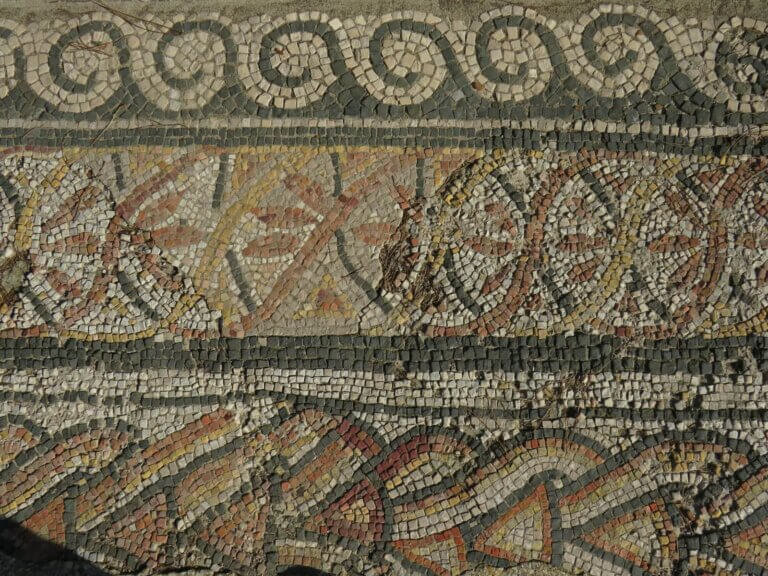
The Roman mosaic tradition uses marble tesserae cut from slabs of three principal stones: the white Carrara marble (the «white» of any classical mosaic), the dark green «verde antico» (the green of the leaves and the borders), and the deep red «rosso antico» from Peloponnese. To these the Vatican atelier adds gold-leaf glass tesserae (for haloes and ornament) and the rare «giallo antico» yellow from Tunisia. The class begins with a guided tour of the studio’s marble library — the small slabs from which the tesserae are cut, each named by the Roman trade name, each from a specific quarry, each with a story attached.
The technique — hammer, mallet, hardie
The mosaic cutting tool is the tagliolo — a small steel-headed mallet — used in combination with a hardie (a small steel anvil set in a wooden block) to cut a marble cube of one centimetre on the side. The Roman cube is, by long tradition, between 8 and 12 millimetres on the side; the smaller cubes are used for skin and shading, the larger for backgrounds and borders. Guests are taught the cutting in the first thirty minutes — the angle of the mallet, the supporting position of the hand, the «click» of a clean cube — and then proceed to cut their own twenty to thirty cubes for the class’s mosaic.
The laying — opus tessellatum
The cubes are laid into a bed of lime mortar (the «letto di calce») on a small marble backing-tile of ten by ten centimetres. The pattern is a simplified opus tessellatum design — a Roman geometric central motif, a Greek-key border, a small inscription. The laying takes ninety minutes; the master is at the guest’s elbow throughout. The result is a small piece of mosaic that is, by the master’s word, «structurally identical» to the floor of a Roman house of the first century CE.
The signing and the return
At the end of the class the master inscribes the back of the mosaic with the guest’s name, the date, and his own studio seal (a small stamped «M»). The mosaic is wrapped in soft cloth and given to the guest in a small wooden box; it can travel home in hand luggage. The class concludes with a small coffee at the studio counter and, for guests who would like it, a glass of the master’s own Frascati.
Combining the masterclass with the rest of the Roman week
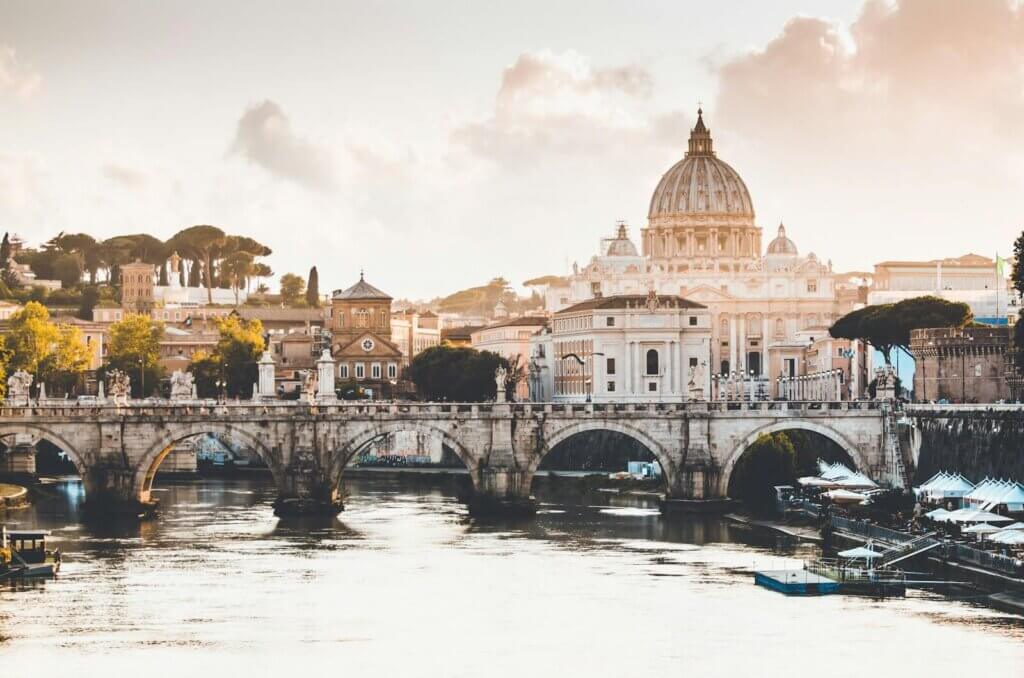
The masterclass pairs naturally with three Roman experiences: a morning at the Vatican to see the mosaics of St Peter’s basilica (the largest mosaic gallery in the world); a visit to Santa Maria Maggiore for the early Christian mosaics; and our pizza bianca masterclass at a different sensory register. For travellers building a Roman «masters’ week», the three masterclasses are run on consecutive mornings; see our complete masterclass catalogue.
Booking and language
The class accommodates up to four guests; it is run in Italian with simultaneous interpretation by Olga (English and Russian). The class is held every Monday, Wednesday and Friday morning; we book four weeks in advance. The cost includes all materials, the wooden box, and the master’s inscribed seal — the small luxury of leaving Rome with a mosaic one has cut and laid by hand.
To plan a private mosaicist masterclass in Rome, contact Olga via Telegram.
From the Journal to your private day
Live this privately
Every day is composed around you — your pace, your interests, your time. Tell Olga what you would like to see.
Speak with Olga All private tours in Rome Build your day