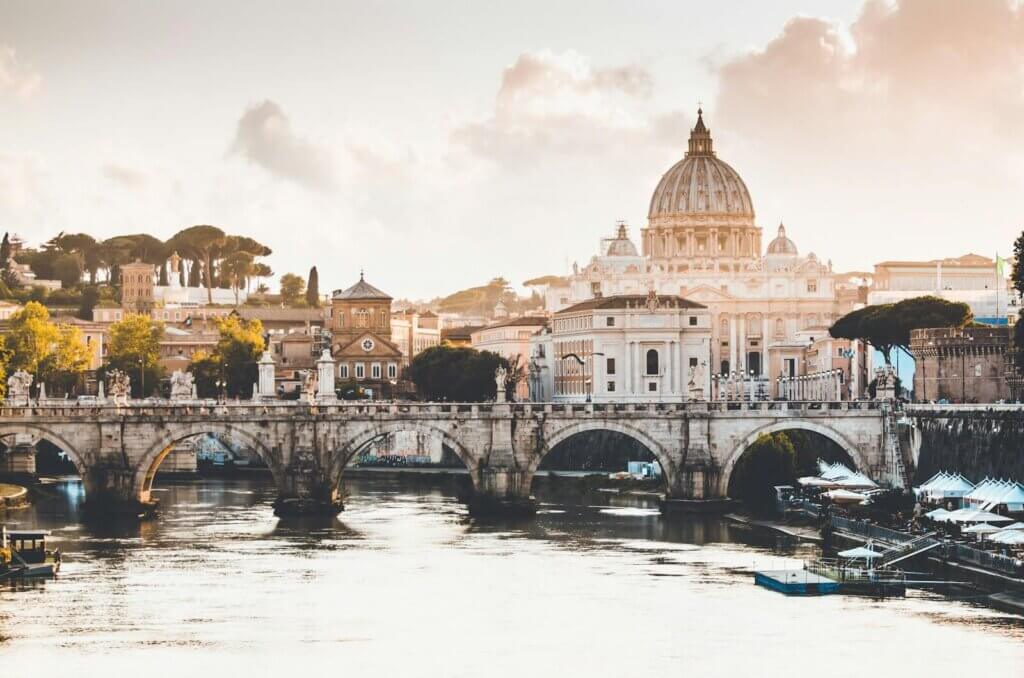




The Vatican Jubilee 2025-2026: Holy Doors Pilgrim Itinerary
The Catholic Jubilee Year that opened on Christmas Eve 2024 and closes on the Epiphany of 2026 is the twenty-seventh ordinary Jubilee since the institution of the Holy Year by Pope Boniface VIII in 1300, and the first Jubilee since 2000 to follow the full set of pilgrim traditions. The Jubilee is, properly understood, a year of indulgence — a time during which Catholic pilgrims may receive a plenary remission of the temporal punishment due for sin, provided they pass through the four Holy Doors of Rome’s four papal basilicas (St Peter’s, St Paul Outside the Walls, St John Lateran, and Santa Maria Maggiore), confess, take communion, and pray for the intentions of the Holy Father. For pilgrims travelling to Rome for the Jubilee, a privately curated three-day itinerary across the four basilicas, with the Scala Santa added on the fifth day, is, in our practice, the most spiritually coherent way to honour the Jubilee tradition.
The Holy Door — what it is
The Holy Door (Porta Sancta) is, in each of the four basilicas, the door that is opened by the pope at the opening of the Jubilee and sealed again at its close. The doors are normally walled up; the bricks are removed at the opening; the door is sealed again on the last day. To pass through the Holy Door is, traditionally, to make a public profession of faith. In 2024 Pope Francis opened the four Holy Doors of the Roman basilicas across the eight days of Christmas, and added — for the first time in Jubilee history — a Holy Door at the Roman prison of Rebibbia. The five Holy Doors will close at the Epiphany of 2026.
Day 1 — St Peter’s Basilica
The pilgrimage opens at St Peter’s. The Holy Door of St Peter’s — by Vico Consorti, opened in 1949 — is on the right of the central portico. The morning pilgrim Mass at 09:00 in the basilica is the natural opening of the day; the passage through the Holy Door is performed in silence between Mass and the visit to the Pietà. The basilica visit (90 minutes) is conducted by Olga with attention to the Jubilee theme — the door, the four piers, the confessio. The morning closes with the visit to the tomb of St Peter beneath the high altar (the Vatican Necropolis Scavi, by separate reservation). Our Vatican without queues itinerary is the umbrella under which the Holy Door visit is arranged.
Day 2 — St Paul Outside the Walls
The second Holy Door is at the basilica of St Paul Outside the Walls, on the southern edge of Rome. The basilica was built by Constantine over the tomb of St Paul; the present church is the 1854 reconstruction after the great fire of 1823. The Holy Door at St Paul’s — by Enrico Manfrini, opened in 2000 — is the most architecturally restrained of the four. The morning pilgrim Mass is at 09:30; the passage through the Holy Door follows. The basilica visit (90 minutes) gives particular attention to the medieval mosaic of the apse and the long colonnade of marble columns that ring the nave. The morning closes with a visit to the basilica’s medieval cloister, the only one of the four Roman papal basilicas to preserve a Romanesque cloister intact.
Day 3 — St John Lateran and Santa Maria Maggiore
The third pilgrim day combines the two remaining Holy Doors. The morning begins at St John Lateran — the Cathedral of Rome and the «mother of all churches» — where the Holy Door (by Floriano Bodini, opened in 2000) opens at 09:00. The basilica visit (60 minutes) is followed by a visit to the Lateran Baptistery and to the Sancta Sanctorum across the piazza (see below). The afternoon moves to Santa Maria Maggiore — the great fifth-century basilica of the Marian cult — where the fourth Holy Door (by Luigi Mattei, opened in 2000) is passed in the early afternoon. The afternoon includes the visit to the Sistine Chapel of Santa Maria Maggiore (the chapel of Sixtus V, not to be confused with the Vatican Sistine), to the Borghese Chapel, and to the basilica’s celebrated fifth-century nave mosaics.
Day 4 — the Scala Santa
The Scala Santa — the «Holy Stairs» — are the twenty-eight marble steps that, by tradition, Christ ascended at the praetorium of Pontius Pilate in Jerusalem, brought to Rome by the empress Helena in the fourth century. The stairs are climbed by pilgrims on their knees, in silence, with a prayer at each step. The Scala Santa is opposite St John Lateran; the climb takes approximately twenty minutes. At the top is the Sancta Sanctorum — the private chapel of the medieval popes — with its acheiropoieton icon of Christ Pantocrator, said by tradition to be the work of an angel. The visit to the Sancta Sanctorum is conducted in silence; it is the most spiritually concentrated moment of the Jubilee programme.
How the pilgrim itinerary arranges itself
The four-day pilgrim itinerary is a slow one; it accommodates time for confession (we arrange for an English-speaking or Russian-speaking confessor at each basilica), for the pilgrim Mass at each, and for the quiet hour of reflection at each Holy Door. For pilgrims travelling with families, we adjust the schedule to accommodate the younger pilgrims. For Russian Orthodox pilgrims visiting Rome during the Jubilee year — and the number has grown steadily since 2024 — we add a fifth day at the Russian Orthodox church of Santa Caterina Martire (Via del Lago Terrione) with a meeting with the Roman parish priest.
To plan a private Jubilee pilgrim itinerary in Rome, contact Olga via Telegram.
From the Journal to your private day
Live this privately
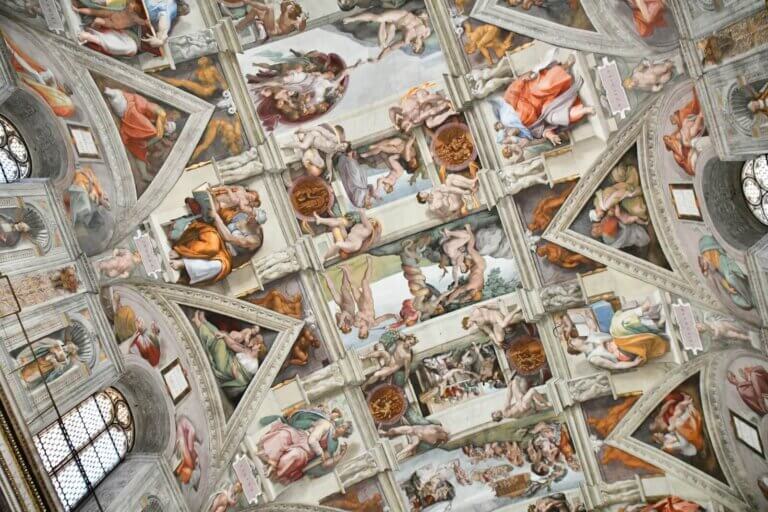 Exclusive Vatican: A World of Grandeur, Art, and Spirituality
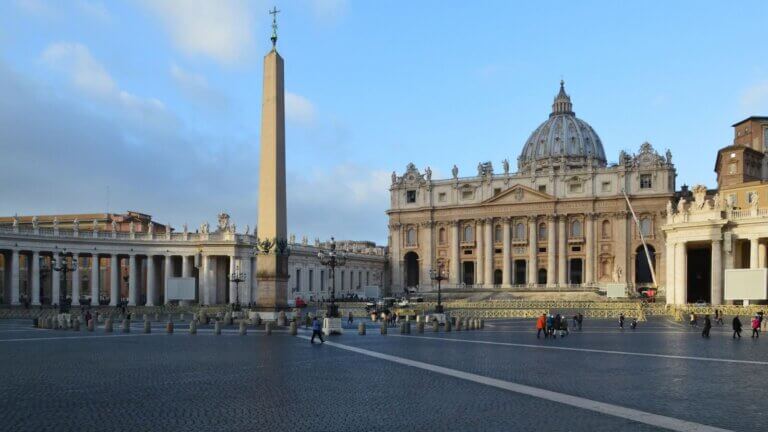 Vatican Without Queues: Discover the Treasures of the Holy See
Every day is composed around you — your pace, your interests, your time. Tell Olga what you would like to see.
Speak with Olga All private tours in Rome Build your day