


The Terrace of the Gods: Rome’s Highest Hidden Viewpoint
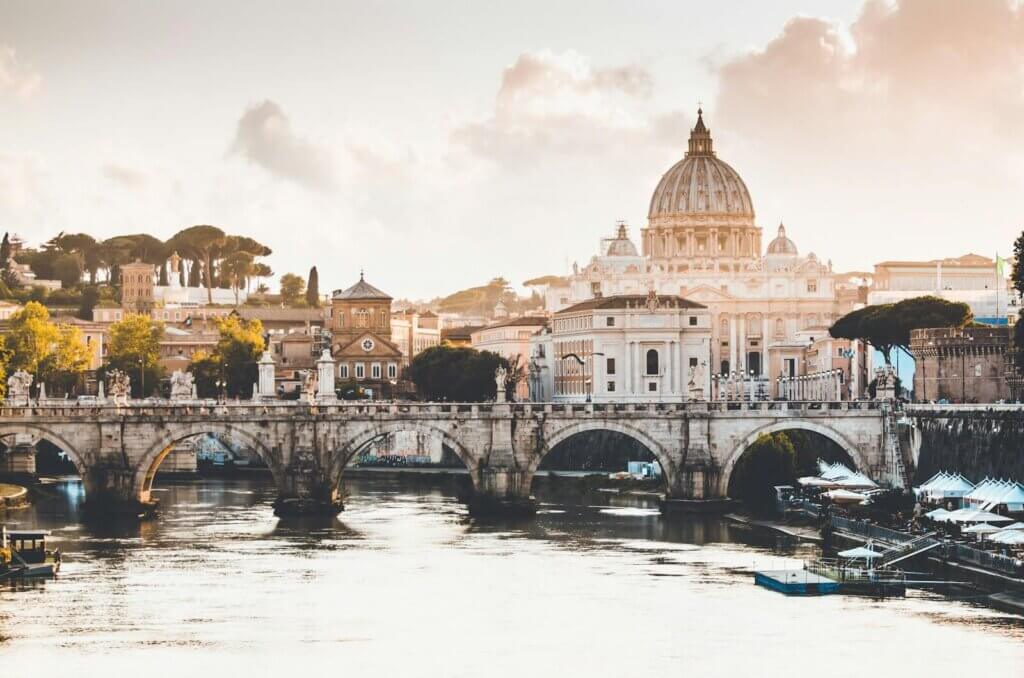
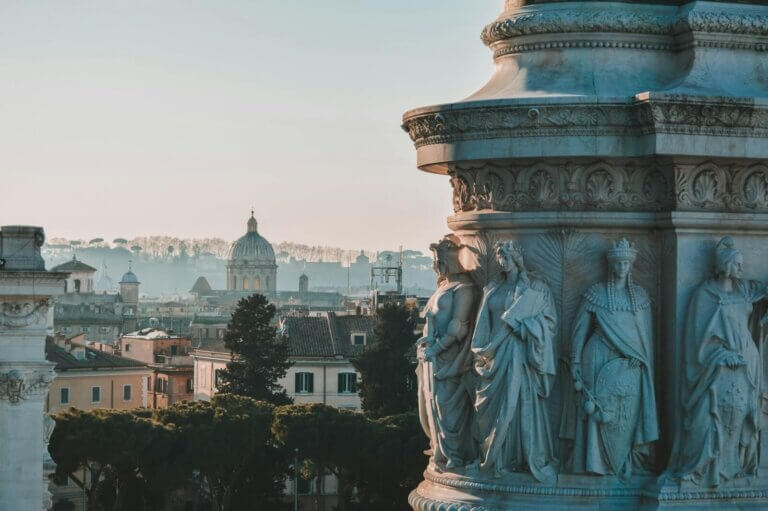
Almost every visitor to Rome photographs the Vittoriano — the white marble monument that closes Piazza Venezia like a wedding cake — and almost no one knows that you can ride a glass elevator to its roof and stand on the highest accessible terrace in the historic centre. Romans call it the Terrazza delle Quadrighe, the Terrace of the Chariots, after the bronze quadrigas that flank the Goddess Victory at the summit; Olga calls it, with reason, the Terrace of the Gods. From it, on a clear morning, the city falls open in a way no other vantage in Rome offers: the Forum to the south, the dome of St Peter’s due west, the cypresses of the Aventine, the basilica of Santa Maria Maggiore, the seven hills laid out as Rubens drew them.
Why the terrace is almost a secret
The Vittoriano was conceived in 1885 as a monument to a unified Italy and inaugurated in 1911, but the panoramic elevators were added only in 2007 as part of the building’s discreet modern restoration. They are at the back of the monument — behind the Altar of the Fatherland — and are reached through a small entrance most visitors walk past without noticing. There is no queue most mornings and no group tour line; the ticket is inexpensive, the lift takes under a minute, and the viewing platform is open to the four winds. Even Roman residents will tell you, often with surprise, that they have never been up.
What you actually see from 80 metres above Rome
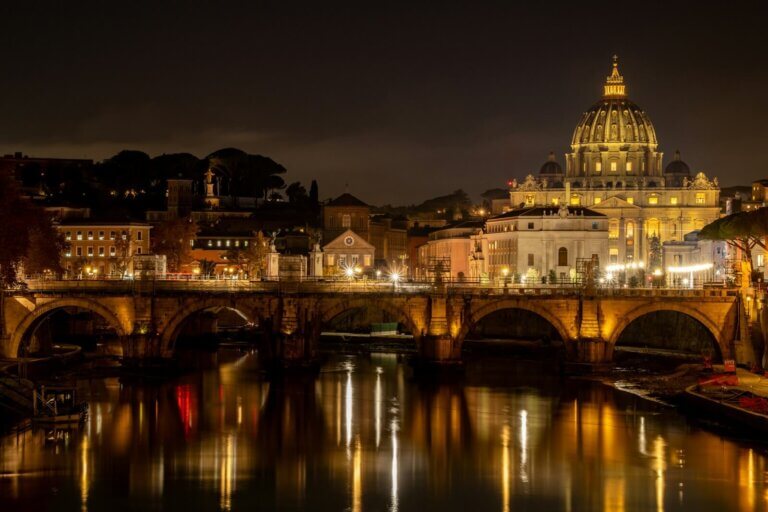
The advantage of the Terrazza delle Quadrighe over the dome of St Peter’s or the Castel Sant’Angelo terrace is the central position. From the dome of St Peter’s you see Rome from the Vatican side; from the terrace of the Vittoriano you see Rome as Rome sees itself. To the south, the Roman Forum and the Palatine arrange themselves below like an architect’s model. To the east, the Trajan Markets and the rear of the Capitoline Hill. To the north, the Quirinale, the dome of Sant’Andrea della Valle, the rooftops of the Centro Storico unrolled towards Piazza del Popolo. To the west, the Tiber bend, Castel Sant’Angelo, and the Cupolone of St Peter’s. The light at 09:00 in summer falls on the Forum and on the dome simultaneously, an hour the photographers know.
How a private morning with Olga arranges itself
The terrace is best as the opening movement of a half-day in the imperial centre. Olga collects guests at 08:45 from a hotel in the Centro or Vatican area, walks them through the back entrance of the Vittoriano, rides the elevator with the second wave of opening (the queue, modest as it is, dissolves by 09:15), and spends about twenty minutes naming the panorama monument by monument — the kind of orientation that makes the rest of the day intelligible. From the terrace, the natural continuation is downward into the Roman Forum and the Palatine, which the Rome sightseeing tour covers in detail.
The bronze quadrigas, and a note on engineering
The two bronze chariot groups that crown the Vittoriano were modelled by Carlo Fontana and Paolo Bartolini between 1908 and 1927. Each weighs more than thirty tonnes; each was cast in eight sections and assembled in situ. The decision to add the panoramic lifts in 2007 was, technically, the more demanding feat: the elevator shafts run inside the rear of the monument without disturbing a single piece of nineteenth-century marble cladding. From the terrace you can put your hand within ten metres of the bronze chariots, close enough to read the harness chiselling on Victory’s horses.
Combining the Vittoriano terrace with the rest of the Capitoline morning
The most elegant sequence is: panoramic terrace at 09:00, Roman Forum and Palatine at 10:00, lunch at a discreet trattoria near Campo de’ Fiori at 13:00, and a private driving tour of Rome’s seven hills in the afternoon when the light turns golden. For visitors who want to see the Forum from above and then descend into it, no other arrangement in Rome offers the same compression. Those who add a comparison of Ostia Antica and Pompeii later in the week complete the imperial picture.
Weather, and what the terrace does in rain
The terrace is open in light rain and even in mist, and the Roman habit of visiting it at sunset rather than morning is, in our experience, a mistake — sunset visitors face the western glare and lose the Forum to the shadow of the Palatine. A second-best option in serious weather is the indoor balcony of the Vittoriano museum directly below the terrace, which shows the same panorama through tall arched windows. For travellers facing a wet day in Rome, the terrace is a natural anchor in our private indoor itineraries.
A final piece of orientation
The terrace is not advertised on the standard tourist circuit because the Vittoriano itself — large, white, slightly bombastic — discourages a certain class of visitor. That is precisely its virtue. Half the guests we bring up emerge into the open air and stop speaking for a full minute. The view is that good, and the climb that easy, and the secret that well kept.
To open your Roman week with a private morning on the Terrazza delle Quadrighe, contact Olga via Telegram.
From the Journal to your private day
Live this privately
Every day is composed around you — your pace, your interests, your time. Tell Olga what you would like to see.
Speak with Olga All private tours in Rome Build your day